
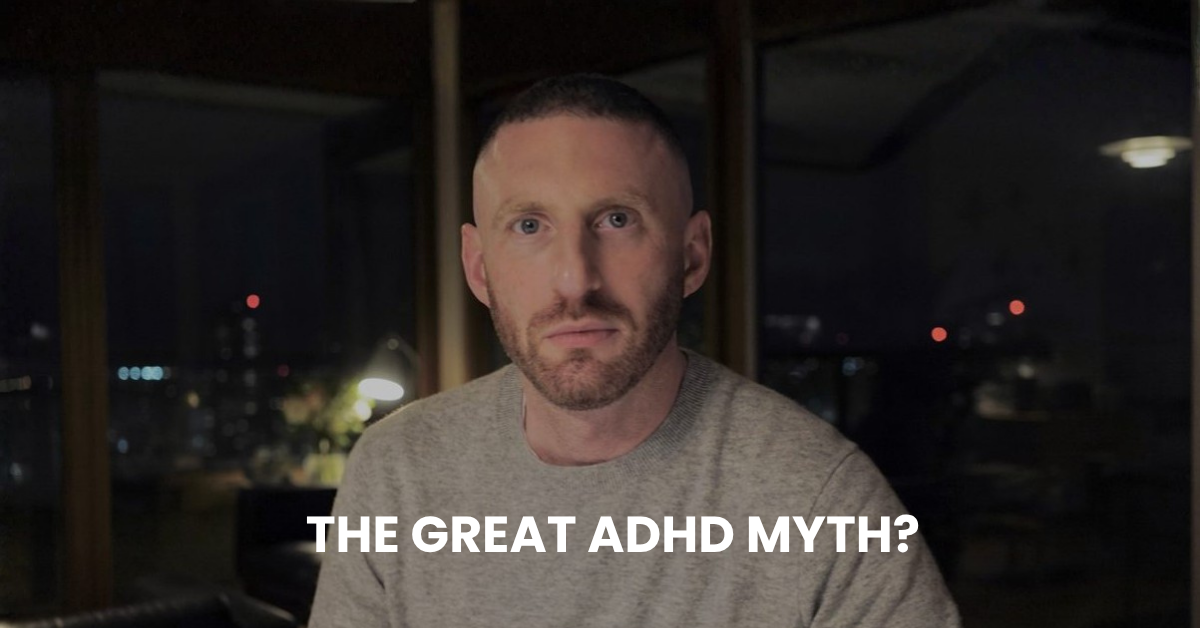
Last night’s Channel 4 documentary The Great ADHD Myth? has aired and, whilst we acknowledge that some of the questions it raises about children’s wellbeing, screen time and outdoor activity are not without merit, the programme was a profound disappointment in both its framing and its evidence base.
Presenting only voices from one side of the clinical debate is not journalism, it is a conclusion dressed as an investigation. What the programme consistently failed to reckon with is the very real health inequalities experienced by those with ADHD. Undiagnosed and unsupported, it can affect educational attainment, employment prospects, relationships and the ability to reach the life goals that most people take for granted.
The question of whether to medicate a child with ADHD is never taken lightly, by clinicians or by families. It is a decision made carefully, collaboratively and in line with NICE guidance, following specialist assessment. The programme’s implication that medication is being dispensed casually is not only inaccurate, it’s insulting to the thousands of families who have agonised over that decision and seen their child’s life transformed as a result. Medication breaks are an established, recommended part of how ADHD is managed in children. This is standard clinical practice.
And while nobody disputes that less screen time and more time outdoors can benefit any child’s behaviour and state of mind, these are complements to treatment, not replacements for it. The traits that come with ADHD – the impulsivity, the dysregulation, the difficulty reading social situations, can profoundly isolate children from their peers. We have treated several hundred children in recent years, and for many of them properly regulated medication has been genuinely life-changing. It is also telling that by the documentary’s own conclusion, the child at its centre showed clear signs of ADHD – very much undermining the very premise the programme set out to prove. A more meaningful documentary would have addressed the age group where the challenges truly surface – teenagers navigating exams, friendships, identity and an education system that was not built for the way their minds work.
We also note the programme’s suggestion that private providers have a financial incentive to over-diagnose. We would be naive to pretend that poor practice does not exist anywhere in the independent sector. It does, and it should be called out and regulated robustly. But to imply this is representative of independent provision as a whole is both unfair and damaging. The reason families turn to private assessment is not because they are chasing a label, it is because the NHS waiting list has, in many areas, become a pathway that leads nowhere. Reputable independent providers operate under CQC regulation, follow NICE guidance and are increasingly subject to ICB accreditation processes specifically designed to assure quality.
The real national scandal is not that too many people are being diagnosed and medicated, it is that too many are waiting years for the assessment that would give them answers, and that some ICBs have now frozen those pathways altogether. That is the documentary Channel 4 should have made.
“At the heart of The Owl is something very simple, we want people to feel heard, understood and supported. When a family comes to us, they are often carrying years of questions, uncertainty and worry. We want them to know they’re not alone, and that we’re here to help them find the answers they’ve been looking for.That’s why conversations about ADHD matter so much to us. Behind every diagnosis is a real person and a real family, and we should never lose sight of that. We can have healthy debate about how ADHD is understood and treated, but that debate should be balanced and unbiased, grounded in evidence, compassion and respect for the people living with it every day.”Nicola Lathey, Founder, The Owl